



By Abdul-Mumin Sofo Yumzaa
Opinion | International Relations, Sovereignty and Global Governance
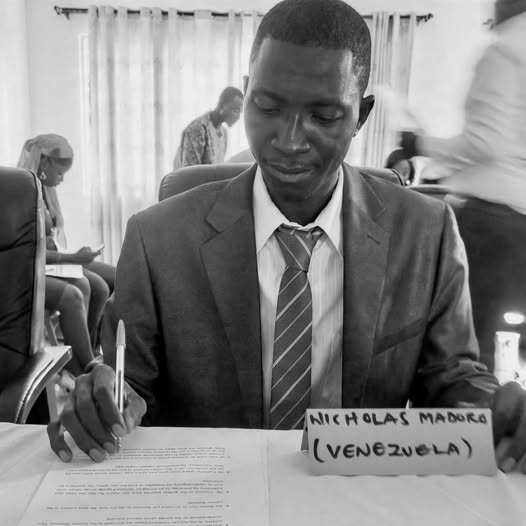
In 2014, I was a young Ghanaian at a youth convening on democracy, governance and anti-corruption. I was not Venezuelan, but during the final exercise, a simulation of the United Nations General Assembly, I became Venezuela’s representative.
Each participant had to assume the role of a delegate-president. When the organisers listed the countries, everyone rushed to represent the easier choices. Then Venezuela came up, and the room went quiet.
Nobody wanted to play the Venezuelan President.
At the time, representing Venezuela meant inheriting a complicated political reputation in the eyes of the West. You had to be willing to challenge sanctions, question the politics of oil and defend the principle that Washington should not determine the political legitimacy of other countries.
I took the role.
Not because I endorsed everything the government in Caracas did, but because someone had to articulate a concern that many smaller nations share: that the international system can appear unequal, that sovereignty is not always applied consistently, and that economic sanctions often impose serious costs on ordinary people.
I drafted a speech, rehearsed it and received coaching from Lawyer Kadiri Abdul Rauf Issifu. Then I stood up and argued against policies I believed threatened the autonomy of smaller nations, including unilateral sanctions, regime-change rhetoric and the use of economic power to influence political outcomes.
My colleagues initially laughed. The nameplate made the exercise feel theatrical. But the questions raised by the simulation were serious: Who decides when a government is legitimate? What limits should apply to powerful countries? And what protections does international law offer states that cannot match the military or economic strength of others?
I left that exercise thinking about a principle that remains relevant today: when powerful states can impose consequences on weaker ones without meaningful international scrutiny, the precedent extends beyond the immediate target.
On 3 January 2026, United States forces conducted a military operation in Venezuela and captured President Nicolás Maduro and his wife, Cilia Flores. They were taken to the United States to face criminal charges. Maduro and Flores pleaded not guilty, and their legal proceedings have continued in New York.
The operation provoked significant debate about sovereignty, the use of force and the limits of national jurisdiction. Legal scholars and political leaders questioned whether the military action was consistent with international law, including the United Nations Charter’s restrictions on the use of force against another state.
These questions matter independently of one’s opinion of Maduro’s government.
Venezuela has faced profound political, economic and humanitarian challenges. Its record on democratic governance, human rights and economic management has attracted extensive criticism. Those concerns should not be dismissed. Nor should they automatically settle the separate question of whether another state may use military force to seize a sitting head of state on its territory.
Opposition to a government and respect for international law are not mutually exclusive.
A government can be criticised for its domestic conduct while the legality of another state’s actions against it is examined independently. If international rules are to carry weight, they must be assessed on the basis of principles and evidence, rather than the popularity or unpopularity of the government concerned.
This is the concern I remember from the 2014 simulation. I did not predict the precise events of January 2026. Rather, I was grappling with the risks that arise when the exercise of power is not matched by effective accountability.
The capture of Maduro raises difficult questions for the international system.
The United Nations Charter establishes a general prohibition on the threat or use of force against the territorial integrity or political independence of states, subject to recognised exceptions. Whether the United States’ operation falls within a lawful exception remains a matter of legal debate. The existence of criminal charges does not, by itself, resolve the international-law question of whether military force may lawfully be used to apprehend a foreign leader on that country’s territory.
The case also raises questions about the immunity that international law generally affords serving heads of state before foreign national courts. The United States has disputed Maduro’s legitimacy as president, but that position does not automatically settle every question of immunity under international law.
These are complex legal issues, and they deserve careful analysis rather than easy conclusions.
The broader concern is institutional. If states interpret international rules selectively, countries with less military, economic and diplomatic power may have fewer effective means of protecting their interests. That can weaken confidence in international institutions and encourage governments to view power, rather than shared rules, as the ultimate guarantee of security.
For countries across Africa and the wider Global South, the credibility of international law matters. Smaller states depend on predictable rules, diplomatic engagement and multilateral institutions because they cannot rely on military strength alone to protect their sovereignty.
This does not mean that sovereignty should shield governments from accountability for abuses. It means that accountability must itself be pursued through legitimate and defensible processes.
Venezuela’s oil resources are central to the debate surrounding its future.
In August 2026, the United States and Venezuela announced an oil arrangement involving substantial Venezuelan reserves and a major role for a US-backed venture. Reporting on the agreement described provisions giving US interests preferential access to oil production and significant influence over aspects of the venture’s governance.
The scale and terms of the arrangement have raised questions about transparency, legal authority, the future of Venezuela’s energy sector and the distribution of economic benefits.
The agreement should not automatically be equated with US ownership of Venezuela’s oil reserves or control of the entire national oil industry. Its precise implications depend on the contractual arrangements, the applicable Venezuelan law and how the agreement is implemented.
Nevertheless, the underlying questions deserve attention.
Who negotiates the terms? What oversight exists? How are public revenues accounted for? What protections ensure that Venezuelans benefit from the development of their natural resources?
These are questions of governance and public accountability, not merely geopolitical competition.
For resource-rich countries, including those in Africa, the lesson is important: natural wealth should be managed transparently, under legitimate legal frameworks and in the public interest. Foreign investment can contribute to economic recovery, but its terms should be open to scrutiny and consistent with the country’s laws and the interests of its people.
If the United States and other powerful states want to strengthen the legitimacy of the international system, the following principles deserve serious consideration.
1. Apply sovereignty consistently.
The territorial integrity and political independence of states should not depend solely on whether their governments are allies or adversaries. Where force is contemplated, states should respect the United Nations Charter and the applicable legal framework, rather than treating unilateral action as a substitute for multilateral legitimacy.
2. Strengthen accountability for sanctions and coercive measures.
Economic sanctions can be used to respond to serious misconduct, but their objectives, legal basis and humanitarian consequences should be assessed carefully. Measures should be proportionate, subject to appropriate review and designed to minimise harm to civilians. Diplomatic and legal alternatives should remain available.
3. Separate criminal accountability from regime change.
Allegations of drug trafficking, corruption or other crimes should be investigated and prosecuted through lawful processes. Such allegations should not automatically be treated as justification for military intervention. International cooperation in law enforcement can help address transnational crime while preserving the distinction between criminal justice and the use of force.
4. Pursue resource partnerships transparently.
Energy and other natural-resource agreements should be governed by clear legal arrangements, independent scrutiny and transparent accounting. Governments should explain how contracts are awarded, how revenues are distributed and how public interests are protected. Commercial partnerships should not become a substitute for legitimate public oversight.
5. Support credible, locally led political transitions.
Where a country faces a political crisis, international engagement should support a credible process shaped by its people. Depending on the circumstances, this may include inclusive dialogue, independent electoral institutions, media freedom, safeguards for political participation and appropriate international observation. Sustainable political legitimacy cannot simply be imposed from outside.
These principles are not a defence of any particular government. They are standards by which the actions of governments—including powerful ones—should be examined.
In that hall in 2014, I was pretending to represent another country. Yet the arguments I tried to make reflected concerns that many young people from the Global South continue to express about international power, unequal treatment and the ability of smaller nations to defend their interests.
The events in Venezuela have made those questions more urgent. They have also shown why political analysis must distinguish between what was anticipated, what actually happened and what remains contested.
I did not predict the date of Maduro’s capture or every development that followed. What concerned me was the possibility that the unequal application of international rules could weaken the protections that smaller states depend on.
That concern remains.
The future of international order cannot rest on the assumption that the strongest state should determine the rules whenever it considers them inconvenient. Nor can sovereignty be used to excuse repression, corruption or violations of human rights.
The challenge is to uphold both principles: governments must be accountable for their conduct, and efforts to hold them accountable must themselves be subject to law.
Twelve years ago, no one wanted to represent Venezuela in a youth simulation. Today, the country has become the focus of a major international debate about sovereignty, military power, criminal justice and natural resources.
The question is no longer simply whether the world saw this crisis coming. It is whether the international community will draw lessons from it that strengthen, rather than weaken, the rules intended to protect all states.
A fair international order must hold governments accountable without making the rights of nations dependent on the power they possess.
Disclaimer: The views expressed in this opinion article are those of the author, Abdul-Mumin Sofo Yumzaa, and do not necessarily represent the official position of Simba Ghana.

No Related Post
We respect your privacy. Simba Ghana processes all personal data in line with the Data Protection Act, 2012 (Act 843). Learn more.